If you’ve ever visited a construction site, a utility grid maintenance project, or a wind farm in the middle of rolling hills or a desert plain, you’ve probably seen power towers standing tall, seemingly unshaken by the ground beneath them. As a power towers supplier, I get asked all the time: how do these structures adapt to such wildly different terrains without failing, shifting, or posing a safety risk? The truth is, power towers aren’t one-size-fits-all. Over the 12 years I’ve been in this business, I’ve worked with engineers, project managers, and on-site crews to tweak designs, materials, and installation methods for everything from soft coastal marshes to steep mountain slopes. It’s not just about building a tall steel frame—it’s about meeting the ground where it is. Power Towers

Let’s start with the basics: what a power tower needs to do, no matter the terrain. They have to hold hundreds of feet of high-voltage power lines, handle wind speeds that can reach 100+ mph in open areas, and support their own weight, all without sinking, tilting, or collapsing. That means the foundation and support system are the most critical parts of adapting to a site—and that’s where most of the customization happens.
Take soft, low-lying terrains like coastal marshes, wetlands, or floodplains. When we first got a call from a utility company working on a project in the Louisiana bayou back in 2015, their original plan called for standard concrete foundations, which would have sunk 18 inches into the soggy peat soil within a year. That’s not just a problem for alignment—over time, uneven sinking can stress the tower’s steel legs and crack the cross-arms that hold the lines. So we switched to pile-supported foundations with large, wide-diameter steel pipes, driven 30 feet deep through the soft peat into the compact sand layer below. We also added a grid of horizontal steel bracing between the pile tops, distributed the tower’s weight evenly so it wouldn’t exert too much pressure on any single point of the marsh, and even specified weather-resistant steel to stand up to saltwater corrosion from nearby coastlines. The project went off without a hitch, and 8 years later, those towers still sit straight, even during hurricane season.
Then there’s flat, arid terrain—think desert regions like the southwestern U.S. or parts of the Middle East. Here, the challenges are the opposite of wetlands: the soil is hard-packed sand and rock, which is great for bearing weight, but wind erosion is a major issue. Strong, sustained winds can blow sand away from around the tower’s base over time, leaving the foundation exposed and vulnerable to shifting. For these sites, we adjust the tower’s footprint first. Instead of a narrow, square base, we use wider, pyramidal steel legs that spread the weight over a larger area of desert soil, reducing the pressure on the ground and helping to resist minor sand movement. We also add a concrete base encasement around the bottom 10 feet of the tower, and in areas with extreme wind, we install small, fixed rock berms around the base to hold sand in place. Last year, we supplied 120 towers for a 200-mile transmission line in the Arizona desert, and the on-site engineer told me last month that sand accumulation around the bases has actually prevented wind erosion, so the foundations are as stable as when they were installed.
Now, the trickiest terrain we deal with: steep, rugged mountains. These sites are hard to access, which means heavy equipment can’t get in to pour large concrete foundations, and soil stability is a constant risk—heavy rain or snowmelt can cause landslides that shift the ground under a tower. A few years ago, we worked on a project in the Rockies where half the towers had to be built on slopes with 30-degree inclines, steeper than a residential driveway. Standard foundations here were out of the question, so we turned to rock-anchored foundations and helical piers. Helical piers are steel shafts with large, spiral blades at the bottom—you twist them into the bedrock or compacted soil, like screwing a screw into wood, creating a strong, secure anchor without needing to excavate large amounts of earth. We also modified the tower’s design to have a tapered, narrower base, since there’s less space to work with on steep slopes. The cross-bracing is reinforced on the uphill side to resist the pull of potential soil movement, and we specify corrosion-resistant steel to handle the higher humidity and temperature swings at high altitude. The project’s biggest challenge was actually delivery—we had to helicopter in all the steel components, but once the piers were anchored, the towers held steady through a record snowfall in 2022 with zero shifting.
Adapting to terrain isn’t just about foundations, though. Material choices also play a big role in making power towers work in extreme environments. For cold, northern terrains, like the Canadian prairies or Alaska, where temperatures drop to -40°F in winter, standard steel can become brittle and crack under stress. We use high-strength, low-alloy (HSLA) steel that’s designed to withstand extreme cold, and we add extra bracing to handle ice accumulation on the lines and towers—ice can add thousands of pounds of weight to a power line, so the tower has to be strong enough to support that. For tropical terrains, where humidity is high and there’s frequent rain, we use hot-dip galvanized steel that’s coated with a layer of zinc to prevent rust, and we adjust the tower’s base to be slightly elevated above the ground to avoid standing water around the foundation.
One thing I’ve learned over the years is that no two terrains are exactly the same. Even within a single project site, you might have a stretch of soft soil and a stretch of rock, so we tailor each tower’s design to its specific spot. We work closely with geotechnical engineers during the planning phase to do soil tests, map out ground stability, and determine the right foundation and material for each location. We also test every custom design in our in-house testing facility, simulating everything from strong winds to extreme temperature swings to make sure the tower will hold up before it leaves our warehouse.
A lot of people outside the industry don’t realize how much goes into making a power tower look simple. But when you’re building a structure that has to last 50 years or more, adapt to whatever the ground throws at it, and keep power flowing to homes and businesses, every detail matters. Whether it’s a tower in a Louisiana marsh, an Arizona desert, or a Colorado mountain slope, the goal is the same: to build something that works with the terrain, not against it.
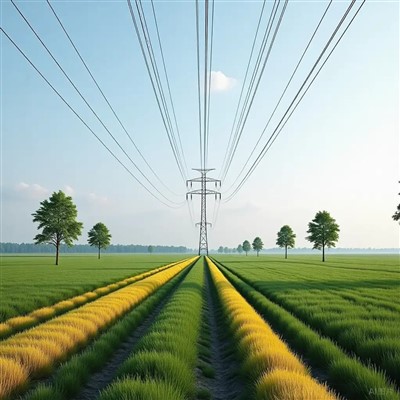
If you’re working on a transmission, distribution, or renewable energy project and need power towers customized for your specific terrain, I’d be happy to walk through your site requirements, share case studies from similar projects, and help you find a solution that’s safe, reliable, and built to last.
Communication Towers References
- Power Engineering Society. (2018). Transmission Line Structural Design: Foundations and Support Systems. Institute of Electrical and Electronics Engineers.
- American Society of Civil Engineers. (2020). Geotechnical Considerations for Utility Structures in Variable Terrain. ASCE Press.
- International Electrotechnical Commission. (2021). Standard for Overhead Power Lines: Tower Design and Terrain Adaptation. IEC 60826.
- National Renewable Energy Laboratory. (2019). Foundation Solutions for Renewable Energy Transmission Towers in Diverse Environments. U.S. Department of Energy.
Hebei Yifeng Steel Structure Co., Ltd.
As one of the most professional power towers manufacturers and suppliers in China, we offer a wide range of products with superior quality. Please feel free to buy cost-efficient power towers for sale here from our factory. Contact us for more details.
Address: Guangchuan Town Industrial Zone, Jing County, Hengshui City, Hebei Province
E-mail: hbyfgjg@163.com
WebSite: https://www.yf-powertowers.com/
