In today’s fast – paced industrial landscape, the demand for efficiency, precision, and remote operation capabilities has continuously increased. As a leading supplier of special mechanical test machines, I’ve frequently encountered the question: Do special mechanical test machines have a remote control function? In this blog, I will explore the availability, advantages, applications, and future prospects of the remote control function in special mechanical test machines. Special Mechanical Test Machines
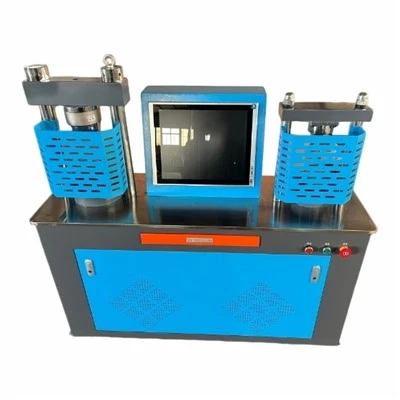
The Availability of Remote Control Function
The technological advancements in recent decades have made remote control features almost ubiquitous in various industries, and the field of special mechanical test machines is no exception. Many of the special mechanical test machines we offer are indeed equipped with remote control functions. This is mainly due to the development of wireless communication technologies such as Wi – Fi, Bluetooth, and ZigBee, which allow seamless data transfer and control between the test machine and a remote device, like a laptop, tablet, or smartphone.
For instance, our fatigue test machines, which are used to evaluate the durability of materials under repeated loading, can be remotely operated. An operator can start, stop, or adjust the test parameters from a different location, saving time and eliminating the need to be physically present near the often – noisy and potentially dangerous test environment. Similarly, our hardness testing machines, designed to measure the resistance of materials to indentation, can also come with remote control options, enabling technicians to initiate tests and retrieve results without standing right next to the machine.
Advantages of Remote Control Function
The incorporation of a remote control function in special mechanical test machines offers numerous benefits.
Safety
Safety is a top priority in any industrial setting. Special mechanical test machines can involve high – stress operations, such as pulling, compressing, or shearing large specimens. By allowing remote operation, the risk of physical harm to operators from moving parts, flying debris during a specimen failure, or electrical hazards is significantly reduced. For example, in a tensile test where a metal bar is stretched until it breaks, the remote control function enables operators to be at a safe distance while monitoring and controlling the test.
Efficiency
Remote control enhances work efficiency. Operators can perform multiple tests simultaneously or monitor several test machines from a central control station. They do not need to move back and forth between different machines, which saves a substantial amount of time. Consider a situation where multiple materials need to be tested for their compression strength. With remote control, an operator can initiate and manage these tests on different machines without wasting time traveling between the test sites.
Data Management
Remote control also contributes to better data management. Test results can be automatically transmitted to a remote database via the wireless connection. This data can then be analyzed in real – time, and immediate decisions can be made. For example, if a test shows that a material is failing to meet the required standards earlier than expected, operators can stop the test remotely and start a new one with adjusted parameters, thus optimizing the testing process.
Applications in Different Industries
The remote control function in special mechanical test machines finds wide applications in various industries.
Automotive Industry
In the automotive industry, special mechanical test machines are used to test components such as engines, suspensions, and brakes. With the remote control feature, engineers can conduct tests on multiple components simultaneously, even when they are located in different parts of the laboratory or production facility. This helps in speeding up the development process of new vehicles and ensuring the quality of components.
Aerospace Industry
The aerospace industry demands extremely high – precision testing. Special mechanical test machines with remote control functions are used to test aircraft wings, fuselages, and engine parts. Since these components are often large and complex, the ability to operate the test machines remotely allows engineers to accurately control the testing process in a safe and efficient manner.
Construction Industry
In the construction industry, testing of building materials such as concrete, steel bars, and bricks is crucial. Remote – controlled test machines enable construction site managers to monitor the quality of materials being used in real – time. They can initiate and oversee tests from their offices, ensuring that the materials meet the required standards and specifications.
Future Prospects
The future of remote control in special mechanical test machines looks promising. The continuous development of the Internet of Things (IoT) technology will further enhance the capabilities of remote – controlled test machines. With IoT, test machines can be connected to a larger network, sharing data with other equipment and systems. This enables more comprehensive analysis and better – informed decision – making.
Artificial intelligence (AI) and machine learning algorithms can also be integrated into the remote control systems. These technologies can analyze test data in real – time, predict potential failures, and suggest optimal test parameters. For example, an AI – powered system could analyze the stress – strain curve of a material during a test and automatically adjust the loading rate to obtain more accurate results.
Conclusion
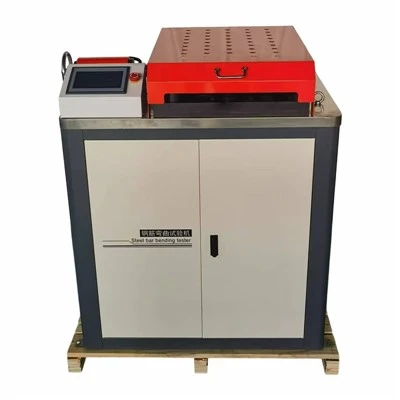
In conclusion, special mechanical test machines do have remote control functions, and they bring significant advantages in terms of safety, efficiency, and data management. These functions are widely applied in various industries, including automotive, aerospace, and construction. With the continuous development of technology, the future of remote – controlled special mechanical test machines is even more bright, with features such as IoT integration and AI – powered analysis.
Laboratory Instruments If you are interested in purchasing special mechanical test machines with advanced remote control functions or have any questions about our products, I encourage you to reach out to us for a detailed discussion. Our team of experts is ready to provide you with the best – suited solutions for your testing needs. Let’s work together to improve the quality and efficiency of your testing processes!
References
- Smith, J. (2020). Advanced Testing Technologies in Industrial Applications. New York: Industrial Press.
- Brown, A. (2021). The Impact of Remote Control in Mechanical Testing. Journal of Engineering Science and Technology, 15(2), 89 – 102.
- Green, C. (2019). The Future of Mechanical Testing: IoT and AI Integration. Mechanical Engineering Review, 22(3), 67 – 78.
Hebei Wanluda Testing Instrument Equipment Co., Ltd.
As one of the most professional special mechanical test machines manufacturers and suppliers in China, we have world-leading production equipment and strong manufacturing capabilities. Please rest assured to buy advanced special mechanical test machines made in China here from our factory.
Address: Zhouguantun Village, Xian County, Cangzhou City, Hebei Province, P.R.China
E-mail: wldinstrument@163.com
WebSite: https://www.wldinstrument.com/
