In the world of precision manufacturing, CNC turning machines and boring machines are two indispensable pieces of equipment. As a supplier of CNC turning machines, I often encounter customers who are confused about the differences between these two types of machines. In this blog post, I will delve into the key differences between CNC turning machines and boring machines, helping you understand their unique features, applications, and advantages. CNC Turning Machine
Working Principles
The fundamental difference between a CNC turning machine and a boring machine lies in their working principles. A CNC turning machine, as the name suggests, operates on the principle of turning. In a CNC turning process, the workpiece is rotated at high speed while a cutting tool is fed linearly against the rotating workpiece to remove material. This rotational movement of the workpiece is the core of the turning operation, allowing for the creation of cylindrical, conical, or other rotational symmetric shapes.
On the other hand, a boring machine is designed to enlarge existing holes in a workpiece. The boring process typically involves a stationary workpiece and a rotating cutting tool that is fed into the hole. The cutting tool moves along the axis of the hole to increase its diameter, improve its accuracy, and enhance its surface finish. Unlike turning, where the workpiece rotates, in boring, the focus is on the precise movement of the cutting tool within the hole.
Machine Structure
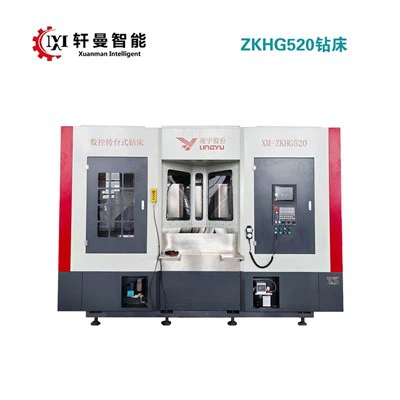
The structure of a CNC turning machine and a boring machine is also quite different, which is closely related to their working principles. A typical CNC turning machine consists of a spindle, a turret or tool post, a carriage, and a bed. The spindle holds and rotates the workpiece, while the turret or tool post holds multiple cutting tools that can be automatically selected and positioned for different machining operations. The carriage moves the cutting tool along the X and Z axes, allowing for precise control of the cutting process.
In contrast, a boring machine usually has a more complex structure. It may include a spindle head, a column, a table, and various feed mechanisms. The spindle head holds the boring tool and provides the rotational motion, while the column supports the spindle head and allows for vertical movement. The table holds the workpiece and can be moved in different directions to position the workpiece accurately. Some boring machines also have additional features such as a boring bar support to ensure the stability and accuracy of the boring process.
Machining Capabilities
The machining capabilities of CNC turning machines and boring machines also vary significantly. CNC turning machines are highly versatile and can perform a wide range of operations, including facing, turning, threading, grooving, and drilling. They are particularly suitable for producing rotational parts such as shafts, pins, bushings, and gears. With the help of advanced CNC controls, CNC turning machines can achieve high precision and repeatability, making them ideal for mass production.
Boring machines, on the other hand, are specialized for hole machining. They can enlarge holes to a high degree of accuracy and achieve excellent surface finish. Boring machines are commonly used in applications where precise hole diameters, straightness, and roundness are required, such as in the manufacturing of engine blocks, hydraulic cylinders, and dies. In addition to single-hole boring, some boring machines can also perform multi-hole boring operations simultaneously, improving productivity.
Precision and Accuracy
Precision and accuracy are crucial factors in machining, and both CNC turning machines and boring machines are designed to achieve high levels of precision. However, the nature of their operations and the types of parts they produce often result in different precision requirements and capabilities.
CNC turning machines are capable of achieving high precision in terms of diameter, length, and surface finish. The rotational movement of the workpiece and the precise control of the cutting tool allow for tight tolerances and excellent surface quality. In general, CNC turning machines can achieve dimensional tolerances in the range of a few micrometers, depending on the machine’s specification and the machining process.
Boring machines, on the other hand, are specifically designed for hole machining and can achieve extremely high precision in hole diameter, roundness, and straightness. The ability to control the movement of the boring tool with high precision within the hole enables boring machines to produce holes with tolerances in the sub-micrometer range. This makes boring machines indispensable for applications where precise hole dimensions are critical.
Surface Finish
Surface finish is another important aspect to consider when comparing CNC turning machines and boring machines. The surface finish of a machined part affects its appearance, functionality, and performance.
In CNC turning, the surface finish is determined by several factors, including the cutting tool geometry, cutting parameters, and the material properties of the workpiece. With proper tool selection and optimization of cutting parameters, CNC turning machines can produce a smooth surface finish on rotational parts. However, the surface finish in turning may be slightly coarser compared to boring, especially in applications where high-speed machining is required.
Boring machines, on the other hand, are known for producing excellent surface finish on holes. The slow and controlled movement of the boring tool within the hole allows for a more precise removal of material, resulting in a smoother and more uniform surface. In addition, the use of specialized boring tools and cutting techniques can further enhance the surface finish of the bored holes.
Applications
The differences in working principles, machining capabilities, precision, and surface finish between CNC turning machines and boring machines lead to their different applications in various industries.
CNC turning machines are widely used in industries such as automotive, aerospace, electronics, and general machinery. In the automotive industry, CNC turning machines are used to produce engine components, transmission parts, and brake system components. In the aerospace industry, they are used to manufacture aircraft engine parts, landing gear components, and structural parts. In the electronics industry, CNC turning machines are used to produce small precision parts such as connectors and pins.
Boring machines are commonly used in industries where precise hole machining is required, such as automotive, aerospace, and heavy machinery. In the automotive industry, boring machines are used to bore engine cylinders, crankshaft journals, and transmission cases. In the aerospace industry, they are used to bore holes in aircraft engine blocks, turbine disks, and structural components. In the heavy machinery industry, boring machines are used to bore large holes in machine frames, hydraulic cylinders, and gears.
Cost and Investment
When considering the purchase of a CNC turning machine or a boring machine, cost and investment are important factors. Generally speaking, CNC turning machines are relatively more affordable, especially for small and medium-sized manufacturers. The cost of a CNC turning machine depends on its size, specifications, and features. A basic CNC turning machine can cost anywhere from a few thousand dollars to tens of thousands of dollars, while a high-end, multi-axis CNC turning center can cost hundreds of thousands of dollars.
Boring machines, on the other hand, can be more expensive due to their complex structure and specialized functions. The cost of a boring machine depends on factors such as its size, precision, and the number of axes. A simple vertical boring machine can cost around $50,000, while a large, high-precision horizontal boring machine can cost several hundred thousand dollars or more.
In addition to the purchase price, the operating cost of the machines also needs to be considered. CNC turning machines typically have lower operating costs because they are more energy-efficient and require less maintenance. Boring machines, due to their complex structure and high precision requirements, may require more frequent maintenance and calibration, which increases the operating cost.
Conclusion

In conclusion, while both CNC turning machines and boring machines are essential for precision manufacturing, they have distinct differences in working principles, machine structure, machining capabilities, precision, surface finish, applications, and cost. As a supplier of CNC turning machines, we understand the unique needs of different industries and can provide high-quality CNC turning solutions to meet your specific requirements.
CNC Turning Machine If you are considering purchasing a CNC turning machine for your manufacturing needs, we encourage you to contact us for a detailed consultation. Our team of experts will help you select the most suitable machine based on your budget, production requirements, and technical specifications. We are committed to providing you with the best products and services, and we look forward to working with you to achieve your manufacturing goals.
References
- ASM Handbook, Volume 16: Machining, ASM International.
- Machining Fundamentals and ProcessSelection, John Wiley & Sons.
- Precision Machine Design, Marcel Dekker, Inc.
Jiangsu Xuanman Intelligent Equipment Co., Ltd.
We’re well-known as one of the leading CNC turning machine manufacturers in China, featured by quality products and low price. Please rest assured to buy discount CNC turning machine made in China here from our factory. We also accept customized orders.
Address: No. 1-1, Weier Road, Jieji Equipment Manufacturing Industrial Park, Sihong County, Suqian City, Jiangsu Province, China
E-mail: jsxmzn@163.com
WebSite: https://www.xm-cnc.com/
