If you’ve ever driven through a snow-covered mountain pass or stood under a grid of power lines glistening with rime, you’ve probably glanced at the tall, angular structures holding those lines up. For decades, I’ve sourced and supplied transmission angle steel towers across North America and parts of Europe, and I can tell you: ice and snow are not just seasonal nuisances for these structures—they’re one of the most unpredictable, costly forces we have to engineer for. Most of my clients, whether they’re utility companies building new lines in the Rockies or upgrading old grids in the Northeast, come to me asking for towers that can handle wind, heat, and even minor seismic shifts. But what they don’t always ask about is the quiet, slow build-up of ice that creeps along steel members for weeks, or the heavy, wet snow that bends a tower before anyone even realizes there’s a problem. Let’s break down exactly how ice and snow alter these critical structures, and why it matters for every power line that keeps your lights on. Transmission Angle Steel Tower

First, I need to get one thing straight: not all ice and snow are the same, and neither are the towers they hit. A tower in the Great Plains, where snow is dry and wind can hit 50 miles an hour, faces different stress than one in the Pacific Northwest, where snow is wet and heavy, or a tower in the upper Midwest, where freezing rain turns into a solid glaze that sticks to every surface. I learned this the hard way back in 2018, when a mid-sized utility in Minnesota reached out to me panicking—three of their 60-foot angle steel towers had collapsed after an ice storm that dumped three inches of glaze over two days. They’d used a standard tower, rated for basic wind loads but not for the unique combination of ice weight and twisting wind that hit that stretch of line. When I got on site, I climbed the remaining towers (after getting clearance from their linemen, who taught me more about tower stress that day than any engineering manual) and saw exactly what was happening. The ice hadn’t just built up on the cross-arms—it had seeped into every gap between the angle steel members, freezing into solid chunks that added up to 1,200 pounds of extra weight per tower. Worse, the wind was pushing that uneven ice load, so the stress wasn’t just downward (compression, as we call it) on the legs of the tower—it was twisting, pulling at the bracing that held the angle sections together. The bracing was only rated for vertical load, not torsional stress, so it snapped, and the tower crumpled like a soda can.
That collapse wasn’t a fluke. Let’s get into the science of it, because this isn’t just heavy snow on a roof—tower stress works on a totally different set of rules. Transmission angle steel towers are built with legs made of two steel angles bolted or welded together, usually forming an L-shape that’s light but strong. The cross-arms, braces, and diagonal members that connect the legs are also angle steel, arranged to distribute the weight of the power lines evenly across four tower legs. The key here is symmetry: every load, every weight, every push from wind or ice has to balance out across that structure. When ice builds up, that symmetry breaks almost immediately. Dry snow, the kind that falls in the Rockies at 10,000 feet, is light—about 7 pounds per cubic foot, compared to 21 pounds per cubic foot for wet, heavy snow—and it settles on horizontal surfaces like cross-arms and the top of the legs. That adds uniform weight, but even then, if it accumulates to 18 inches (which isn’t unheard of in high elevations), that’s an extra 3,000 pounds on the top of a 100-foot tower. That’s enough to compress the legs slightly, but if the tower was engineered for that load, it should hold. The problem comes when the snow melts a little at night, then refreezes during the day’s cold snap—turning loose snow into ice that sticks to vertical members, too. Now you have weight on horizontal and vertical surfaces, creating an uneven load that pulls one side of the tower down faster than the other. That’s what caused a partial collapse on a line we supplied a tower for in Wyoming in 2021; the client had picked our standard 100-foot tower, which was rated for 10 inches of snow, but an unseasonal cold snap turned 15 inches of snow into ice that stuck to the diagonal braces, twisting the tower’s cross-arm at a 15-degree angle before we could send a replacement.
Freezing rain is a whole different beast, and it’s the reason I work with a structural engineer who specializes in winter weather loads. Glaze ice, as it’s called, is 50 times heavier than dry snow, and it sticks to every surface—even the windward side of a tower, where wind pushes moisture onto the steel members. Back in that 2018 Minnesota collapse, the glaze ice built up at a rate of a quarter of an inch per hour, and on a 6-inch angle steel leg, that extra quarter-inch on every side added almost 200 pounds of ice per foot of leg. Over a 60-foot tower, that’s 12,000 pounds of ice on the legs alone, plus the ice on the cross-arms and power lines. But here’s the part most people don’t talk about: ice doesn’t just add weight—it changes the aerodynamics of the tower, turning it into a giant sail. When wind hits a smooth, un-iced tower, it flows around the steel members with relatively little drag. When it hits ice, the surface becomes rough and uneven, and the ice adds extra surface area for wind to push against. For angle steel towers, that drag is a double whammy: the wind pushes the tower sideways, creating a bending force at the base of the tower, and the ice’s uneven weight adds a twisting (torsional) force, like turning a doorknob that’s stuck. The 2018 towers failed because the base of the legs couldn’t handle that combined bending and torsional stress. We later retrofitted those towers with additional bracing and thicker angle steel on the legs, and in the 2021 ice storm that hit southern Minnesota, they held—no issues, even when neighboring unretrofitted towers went down.
Another thing ice and snow do to transmission angle steel towers is something I learned from 30 years of handling steel supplies: they accelerate corrosion. Wait, I know—corrosion is usually from rain, road salt, or humidity, not snow. But let’s think about it. When snow melts, it mixes with any road salt or industrial pollutants that are in the air, then seeps into the tiny gaps between the angle steel members and the bolt holes that hold the tower together. Once that moisture freezes, it expands by 9 percent, prying those gaps open wider. Over time, repeated freeze-thaw cycles break down the protective zinc coating we apply to every tower (hot-dip galvanizing, the standard for transmission steel), leaving bare steel exposed. That bare steel rusts, and rust expands too—turning the tight fit between bolt and angle steel into a loose, wobbly connection. I saw this on a line we supplied towers for in upstate New York a few years ago; a client forgot to budget for regular inspections, and after three winters, the bolt holes in the cross-arm bracing had rusted so badly that a heavy load of wet snow made one cross-arm swing loose, taking two power lines down with it. The linemen told me later that the rust lines in the bolt holes were thicker than a pencil, and the bolts had turned so soft from corrosion that they’d bent when the tower shifted.
Now, I’m not just here to scare you—my job is to supply towers that stand up to these conditions, so let’s talk about what we do to account for ice and snow, and what utility clients should look for when picking a tower supplier. First, it’s all about load ratings, and not just the basic “wind speed” or “snow load” numbers you’ll see on spec sheets. A good supplier will ask you for site-specific data: what’s the average annual snow load in the area (not the 10-year average, but the 50-year extreme—because that’s the storm that will take your tower down), are there frequent freezing rain events, and what’s the wind direction in winter? For example, in mountainous areas, wind often blows straight downslope in winter, creating much higher drag loads than flat areas, so a tower in the Rockies needs thicker bracing than the same tower in Ohio. We also offer “ice-resistant” towers that use larger diameter steel in high-stress areas, and we design the angle steel members to have slightly rounded edges where ice can’t build up as thick—sharp edges catch ice and hold it, while rounded edges let wind blow most of it off. That Wyoming tower I mentioned earlier was a standard model, but when that client reached out again last year for a replacement line, we built towers with rounded cross-arm edges and thicker diagonal bracing, and they told me their site manager has been monitoring them all winter—no ice build-up over 4 inches, compared to the 12 inches they saw on the old towers.
Another step we take is hot-dip galvanizing, and not just a thin coat. We use a 3-mil zinc coating on every part of the tower, including the inside of the bolt holes and the gaps between angle steel pieces. That zinc acts as a sacrificial layer—when moisture gets in, the zinc corrodes first, before the steel. We also add small drainage holes in the lowest part of each leg, so melted snow and rain can’t pool and sit there, causing rust. The Minnesota retrofits we did after the 2018 collapse included these drainage holes, and when we inspected them two years later, there was no rust in the leg bases—where the old towers had developed a quarter-inch of rust in just one winter. One mistake I see a lot of utility companies make is cutting corners on galvanizing to save money, and then dealing with rusted towers and collapsed lines a few years down the line. I’ve been in this business long enough to know that a $500 difference in tower cost now costs $50,000 in repairs later, and that’s a lesson I don’t let my clients forget.
Let’s also talk about the human side, because this isn’t just engineering—this is about keeping power on for hospitals, schools, and homes during the worst winter storms. Back in 2022, a major ice storm hit Maine, and a utility that buys 90% of their towers from us called me at 2 a.m., panicking because three towers on a critical line to Portland were showing signs of twisting. Their linemen were stuck on the road because of ice, so I hopped in my truck at 5 a.m. and drove four hours to the site, bringing a portable load meter we use to test tower stress. Turns out, the towers had held a 9-inch glaze ice load, but we’d added extra guy wires (heavy steel cables anchored to the ground) to the high-wind legs, and that had kept the bending stress below the rated limit. We adjusted the guy wires on the remaining towers that day, and by the time the linemen got there, they were safe to check the lines. That’s the kind of thing that matters: when a storm hits, you don’t just need a tower that’s engineered well—you need a supplier who knows how those towers perform in the real world, not just in a lab.
I’ve seen too many lines go down because of ice and snow, and too many clients get stuck with towers that were built for the wrong conditions. The truth is, transmission angle steel towers aren’t one-size-fits-all. A tower that works in Arizona’s dry, low-snow climate will fail in the Pacific Northwest’s wet, heavy snow. A tower that works in flat Iowa will fail in the Colorado Rockies’ high winds and ice storms. The key is finding a supplier who doesn’t just read spec sheets, but has boots on the ground, has seen these storms, and designs and builds towers that account for the specific ice and snow conditions of your site.
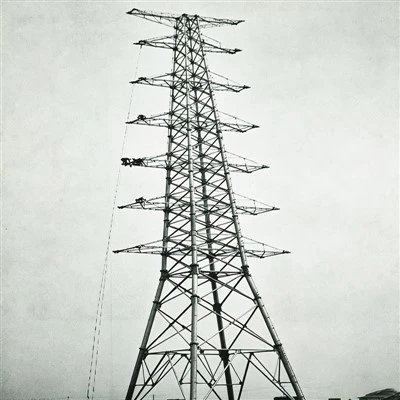
If you’re a utility company, a power line contractor, or anyone who needs reliable transmission structures that can stand up to winter weather, I’m here to help. We don’t do generic towers—we work with you to assess your site’s ice and snow risks, design a tower that matches your needs, and supply it on time, every time. I’ve spent 30 years learning how ice and snow affect these structures, and I want to bring that experience to your next project. Whether you’re building a new line or upgrading an old one, let’s talk about how we can make sure your towers hold up, even when the worst winter storms hit.
Transmission Angle Steel Tower References
- American Society of Civil Engineers. (2017). Load and Resistance Factor Design (LRFD) for Transmission Line Structures. ASCE Publications.
- International Electrotechnical Commission. (2020). IEC 60826: Design Criteria of Overhead Transmission Lines. IEC Standard.
- Electric Power Research Institute. (2019). Winter Weather Impacts on Transmission Infrastructure. EPRI Report.
- National Association of Corrosion Engineers. (2021). Corrosion Prevention for Steel Transmission Structures in Cold Climates. NACE International.
Qingdao Hongyuanfeng Power Equipment Co., Ltd.
Hongyuanfeng is one of the most professional transmission angle steel tower manufacturers and suppliers in China, also supports customized service. Please feel free to wholesale advanced transmission angle steel tower in stock here from our factory. Good service and quality products are available.
Address: No.42 Fengwu Road, Beiguan Industrial Park, Jiaozhou City
E-mail: 13808970205@163.com
WebSite: https://www.hyfsteelpod.com/
