Hey there, if you’ve ever stood next to a commercial brewhouse system—like the ones we build here at our shop—you might’ve noticed it’s way more than just shiny steel tanks and pipes. People often ask us, “What’s the footprint of a brewhouse system anyway?” and most of the time, they’re not just talking about the physical space it takes up on the brewery floor. Yeah, that’s a big part of it, but there’s way more to the story—energy, water, waste, even the “invisible” footprint that affects how the whole operation runs. Let’s break this down like we would over a post-shift beer, no fancy engineering jargon, promise. Brewhouse System
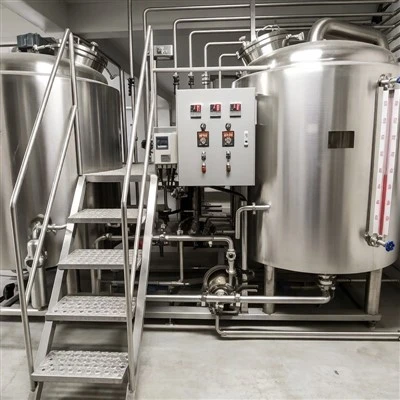
First off, let’s get the obvious out of the physical footprint, because that’s usually the first thing a new brewery owner asks. We see it all the time: a craft brewer comes to us with a tiny warehouse spot, thinks they can squeeze in a 10-barrel system, and leaves confused when we say they need a 20x30ft area minimum, not 15×20. Here’s the tea: brewhouses aren’t just the mash tun, lautering tun, kettle, and whirlpool side-by-side. There’s also the space around them for pipes, valves, pumps, hoses, and walkways for brewers to move between steps—you can’t be dumping grain or moving hops over a pile of pipes, that’s a safety hazard and a workflow killer. Plus, if you’re doing hot side (the part where you boil wort) and cold side (fermentation, conditioning) separately, you need extra space for manifolds and heat exchangers. Even small systems—say, a 1-barrel nano setup—need at least 10x12ft, but that’s tight; you’ll regret it when you’re trying to adjust flow rates and can’t fit a scale for hops. We recently worked with a nano brewer in Portland who tried to skimp on space, and six months in, they had to move half their system because they couldn’t add a whirlpool, which was holding back their IPA game. Moral of that story: physical footprint isn’t just about the tank dimensions—it’s about how the system actually works day-to-day.
Now, let’s dive into the energy footprint, which is the invisible big one. Brewhouses are energy hogs, full stop. Most of the energy goes to heating water for mashing, boiling wort, and cleaning the system after a brew day. For a traditional gas-fired system, that’s a lot of BTUs—we’re talking 20,000 to 50,000 BTU per hour for a 10-barrel system. But here’s where we come in: we build systems that lower that energy footprint without killing efficiency. For example, we add heat exchangers that capture the hot wort from the kettle before it goes to fermentation, and use that heat to warm up incoming cold water for mashing. One of our clients in Colorado cut their natural gas bill by 35% just from that small tweak. Also, electric vs. gas? A lot of new breweries lean electric these days because it’s easier to pair with solar, which lowers the overall carbon footprint. But you have to size your electrical panel right—skimping there leads to tripped breakers mid-boil, which is a brewing nightmare. We always walk our clients through energy modeling so they don’t overpay for utility use or end up with a system that’s a drain on the planet and their wallet.
Next up, the water footprint—brewhouses use insane amounts of water, way more than people realize. The common rule of thumb is 4 to 5 barrels of water for every 1 barrel of beer, but that’s just for brewing. We’re talking about cleaning too—CIP (clean-in-place) cycles use 2 to 3 extra barrels per brew day. So a 10-barrel system is using 60 to 80 barrels of water every single brew day, and that’s before you account for any leaks or inefficient rinsing. But again, we’ve got solutions for that. Our systems have low-flow spray balls for CIP, smart sensors that cut water off when the tank is clean, and some even capture cold condensate from the steam system to use for pre-rinsing grain. A craft brewery in Ohio we work with now reuses 40% of their brewhouse water, which has cut their water bill by $1,200 a month. The key here is that water footprint isn’t just the amount you pull from the tap—it’s how much you send down the drain too, which ties into local wastewater fees and environmental regulations. We always tell clients to check their city’s wastewater rules upfront, because some places charge extra for high-strength brewery wastewater (all that yeast and grain solids), so a system that cuts down on water use also cuts down on those fees.
Then there’s the waste footprint, which is probably the most overlooked part of the brewhouse’s total footprint. What goes down the drain, or gets hauled away as solid waste? Brewhouse waste is mostly spent grain, spent yeast, and trub (the gunk left in the kettle after boiling). A 10-barrel system produces about 1,200 lbs of spent grain per brew day. If you’re just dumping that in a trash bin, that’s 25+ bins a month, and it’s a huge waste—spent grain is perfect for animal feed, garden mulch, or even baking bread. We work with clients to set up small on-site grain collection bins, or even add a grain press that lets you sell the spent grain to local farmers or bakeries. Spent yeast is another one—instead of throwing it out, you can repitch it for the next batch, which saves money on yeast supplies and reduces waste. We’ve had a couple clients who now make dog treats out of their spent grain, which is a great marketing angle too—people love that a brewery is being sustainable. The trub is a bit trickier, but some systems have filters that separate hop particles and yeast so they can be composted instead of sent to a landfill.
Wait, let’s not forget the supply chain footprint, which is the “upstream” part that most brewers don’t think about. The brewhouse system itself is made of stainless steel, pipes, pumps, controls—all of which have their own carbon footprint from mining, manufacturing, and shipping. That’s why we source most of our materials from local metal fabricators within 100 miles, instead of importing from overseas. We also design our systems to be modular, so if a brewer outgrows a part of it, they can upgrade that section instead of buying a whole new system. A lot of big equipment manufacturers make you replace the whole thing when one part breaks, but that’s a terrible footprint and a waste of money. Our modular design means our systems last 15+ years, sometimes longer, which cuts down on the waste from old equipment. We recently had a client who upgraded their 5-year-old 10-barrel system to a 20-barrel one by just adding two new tanks instead of replacing everything—they saved $15,000 and kept the old equipment out of a landfill.
Let’s be real, though—there’s no such thing as a zero-footprint brewhouse. Even the most efficient system uses energy and water, and produces some waste. But the goal is to minimize all those footprints without sacrificing the quality of the beer, which is what our clients care about most. We’ve seen brewers get so caught up in “going green” that they buy a system with fancy energy features that actually make their beer worse because they skimped on temperature control. That’s why we tailor every system to the brewer’s needs: if they’re focused on IPAs, which need precise lautering and whirlpool times, we don’t cut corners on that even if it means a slightly larger physical footprint. If they’re a sustainability-focused brewery, we prioritize low energy and water use, but still make sure the system can produce consistent, great beer.
I want to circle back to that physical footprint one more time because it’s the thing that causes the most headaches for new brewers. We had a guy come to us last year who was leasing a 1,500 sq ft space for his nano brewery, and he thought a 7-barrel system would fit. Turns out, the 7-barrel system he was looking at needed 1,200 sq ft just for the brewhouse and cold side, plus another 300 sq ft for fermenters. He was already locked into the lease, so we had to downsize him to a 3-barrel system that still let him hit his production goals for the first year. Lesson learned: always map out your entire brewery space before picking a system, not just the brewhouse itself. Fermenters, storage for grain and hops, and packaging equipment all take up space too—don’t make the mistake of thinking the brewhouse is the only thing that matters for floor space.
Another thing we talk about with clients is the “operational footprint,” which is how easy the system is to run. If your system is super complicated, you’re going to have higher labor costs, and brewers are more likely to make mistakes that lead to wasted beer. Our systems have user-friendly controls—touchscreens that let you adjust mash temps, boil times, and flow rates with the push of a button, not a bunch of dials that no one understands. That means less wasted beer, which lowers the waste footprint and increases profitability. We had a small brewery in Tennessee that was using a cheap imported system that took two brewers 8 hours to do a 5-barrel batch. After they switched to our system, it took one brewer 5 hours, so they could do two batches a day instead of one. That’s not just better for their bottom line—it’s a smaller footprint because they’re using less energy and labor per barrel of beer.
Let’s wrap this up: the footprint of a brewhouse system isn’t a single number. It’s the physical space it takes on the floor, the energy it uses, the water it pulls from the tap and sends down the drain, the waste it produces, the supply chain that makes it, and how easy it is to run. As a brewhouse system supplier, our job is to build systems that balance all of these things—minimize the bad footprints, maximize the good, and still let brewers make amazing beer. If you’re a brewer out there trying to figure out what kind of system works for your space, your goals, and your sustainability priorities, we’re here to chat. No sales pitches, no jargon, just real talk about what you need to make your brewery work. If you want to hash out your space, energy, or water goals, get in touch with us to talk through your options.
Scale Beer Equipment References
- Brewers Association. (2022). Water Use in Craft Brewing: Trends, Challenges, and Opportunities.
- American Society of Brewing Chemists. (2021). Energy Efficiency in Commercial Brewhouse Operations.
- National Renewable Energy Laboratory. (2020). Modular Brewing Systems: Reducing Upfront Costs and Environmental Footprints.
- Local Food & Agriculture Council. (2023). Spent Grain Repurposing: A Guide for Craft Breweries.
Wenzhou Jinggong Machinery Equipment Co., Ltd.
We are one of the most professional brewhouse system manufacturers and suppliers in China. With abundant experience, we warmly welcome you to buy customized brewhouse system at competitive price from our factory. If you have any enquiry about quotation, please feel free to email us.
Address: No.Jiadi Industrial Zone, Yaoxi Town, Longwan District, Wenzhou City, China.
E-mail: jinggong2026@163.com
WebSite: https://www.jg-ind.com/
